
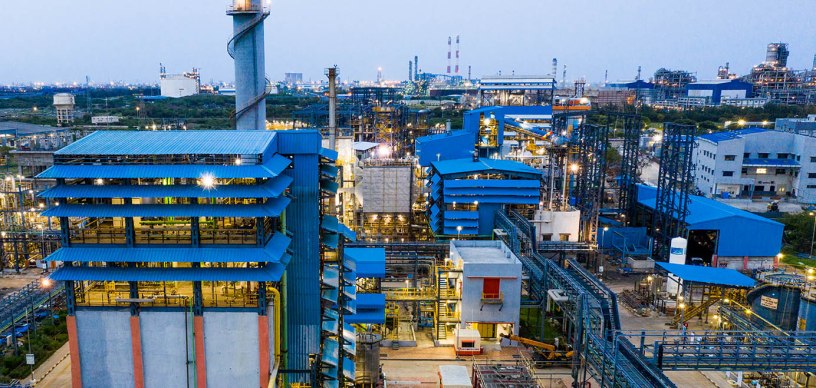
Introduction: The Pulse of Modern Civilization
Industries form the economic and cultural foundation of every developed society. They are the systematic processes through which raw materials are transformed into goods and services, powering growth, innovation, employment, and national progress. As the world stands at the intersection of digital revolutions, environmental urgency, and socio-economic realignment, industries are no longer just factories or manufacturing units—they are dynamic ecosystems driving human advancement. This article explores the multifaceted nature of industries, tracing their evolution, examining their structures, highlighting their impacts, and assessing the emerging trends reshaping the industrial world.
The Structure of Industrial Classifications
To understand industries comprehensively, one must examine how they are categorized. Industrial classification reflects the diversity of their functions and their critical contributions to economic chains.
Primary Industries: Foundation of Raw Material Supply
Primary industries engage directly with natural resources. These are the oldest industrial forms, deeply rooted in agriculture-based and extractive activities.
- Agriculture and Farming: The backbone of food systems, providing the essential inputs for food processing industries.
- Mining and Quarrying: Critical for extracting metals, minerals, and energy sources like coal and oil.
- Fishing and Forestry: Supporting nutrition and supplying materials such as timber and marine products.
Secondary Industries: Transformative Production Sectors
These industries take raw materials from the primary sector and convert them into finished or semi-finished products.
- Manufacturing: Ranges from small-scale production of artisan goods to large-scale automotive and electronics manufacturing.
- Construction: Involves infrastructure development—roads, bridges, buildings, and urban projects that shape modern living environments.
- Chemical and Processing Industries: Essential for pharmaceuticals, fertilizers, plastics, and industrial chemicals.
Tertiary Industries: Service-Driven Support Networks
Also known as the service sector, tertiary industries do not produce tangible goods but support other sectors and directly serve consumers.
- Retail and E-Commerce: Facilitates the distribution and sale of finished products to end users.
- Finance and Insurance: Offers capital, manages risk, and sustains industrial expansion.
- Transportation and Logistics: Ensures seamless supply chains and market access across geographies.
Quaternary and Quinary Industries: The Knowledge and Leadership Frontier
Modern economies rely heavily on intellectual capabilities and decision-making expertise.
- Quaternary Industry: Focuses on information services, IT, research, and consultancy—driving innovation and technological growth.
- Quinary Industry: Comprises top executives, policymakers, and thought leaders who shape industrial strategy and governance.
The Industrial Evolution: From Steam to Silicon
Industries have experienced multiple revolutions that reshaped the way societies function and economies grow.
- First Industrial Revolution: Sparked in the late 18th century by steam engines, it mechanized production and gave birth to textile factories and railroads.
- Second Industrial Revolution: Late 19th to early 20th century saw mass production, electrification, and innovations like the assembly line.
- Third Industrial Revolution: From the 1970s onward, digital technologies, automation, and computing reshaped production and communication.
- Fourth Industrial Revolution: Today’s era is defined by artificial intelligence, smart factories, the Internet of Things (IoT), and machine learning.
Industries as Economic Catalysts
The significance of industries extends far beyond output and trade. They are central to socioeconomic development and national competitiveness.
Job Creation and Skill Development
Industries provide employment to millions, from blue-collar workers on factory floors to white-collar professionals in design, engineering, and management. With increasing automation, the demand for skilled labor, particularly in tech-driven sectors, is surging.
Urbanization and Infrastructure Growth
Industrial hubs catalyze urban development. Cities evolve around industries, bringing roads, housing, utilities, educational institutions, and healthcare facilities into previously underdeveloped areas.
Innovation and Technological Advancement
Research and development within industries lead to innovations that not only improve productivity but also redefine consumer lifestyles. Smartphones, renewable energy technologies, and autonomous vehicles are all by-products of industrial R&D.
Global Trade and Interdependence
Industries play a pivotal role in international trade. Countries specialize in specific industrial domains—Germany in automobiles, China in electronics, India in IT services—creating a complex web of economic interdependence.
Challenges Facing Contemporary Industries
While industries are agents of growth, they also face numerous challenges that demand urgent and strategic responses.
- Environmental Degradation: Industrial emissions, water pollution, and deforestation contribute significantly to ecological imbalance.
- Resource Scarcity: Overreliance on non-renewable resources raises sustainability concerns.
- Workforce Disruption: Automation and AI threaten to replace traditional jobs, requiring large-scale reskilling efforts.
- Geopolitical Risks: Global supply chains are vulnerable to political conflicts, trade wars, and regulatory disruptions.
- Data and Cybersecurity: As industries digitize, protecting sensitive data from cyber threats becomes critical.
The Sustainable Industry Imperative
Sustainability is no longer optional—it is a necessity. Green industries are rising as a response to climate change and resource depletion.
Strategies for Sustainable Industrial Practices
- Clean Energy Adoption: Shifting from fossil fuels to solar, wind, and hydroelectric sources.
- Circular Economy Models: Emphasizing reuse, recycling, and product lifecycle management.
- Eco-Friendly Technologies: Water-efficient machinery, low-emission vehicles, and biodegradable materials.
- Compliance and Regulation: Adhering to environmental standards like ISO 14001, and aligning with ESG (Environmental, Social, Governance) frameworks.
Digital Transformation and Industry 4.0
The integration of digital technologies is redefining industrial efficiency, customization, and scalability.
Key Innovations Leading the Way
- Artificial Intelligence: Predictive analytics, quality control, and autonomous operations.
- IoT-Enabled Systems: Real-time monitoring, smart warehousing, and connected machinery.
- Additive Manufacturing (3D Printing): On-demand production and prototyping.
- Blockchain: Securing supply chain transparency and authentication of goods.
Conclusion: The Industrial Horizon
Industries are no longer static entities rooted in production—they are living, evolving systems that influence how societies live, consume, and grow. As global economies grapple with sustainability, technological shifts, and social transformation, the role of industries becomes even more critical. The future demands industries that are not only productive and profitable but also responsible, resilient, and responsive to the needs of the planet and its people. From digital innovation to environmental stewardship, the industrial world is being rewritten—and those who adapt with vision, integrity, and innovation will lead the next era of progress.
 News 24 Business Blog