
The most enduring brand memories are not formed by looking at advertising. They are formed by doing something, tasting, touching, playing, discovering, participating in a moment that is physical and present and connected to a brand in a way that passive media exposure cannot replicate. This is the premise of experiential design, and it is a premise supported by a substantial body of research into how human memory works.
Emotional experiences ? those that engage the senses, create a sense of novelty or discovery, and involve some form of participation ? are encoded more strongly in memory than passive exposure. A customer who has had a well-designed brand experience remembers the brand differently than one who has seen an advertisement. The memory is richer, more specific, and more likely to influence future behaviour.
Dezign Format creates experiential design for Singapore brands and international organisations, building environments and activations that generate the kind of brand memories that paid media alone cannot produce.
What Experiential Design Actually Involves
Experiential design is a discipline that draws on spatial design, interaction design, narrative structure, and sensory psychology to create environments where visitors actively engage with a brand’s story rather than passively receiving it.
The physical environment is the primary medium. The layout, materials, lighting, sound, and interactive elements of the experience space are all design decisions with consequences for how visitors move through the space, what they notice, what they do, and ultimately what they remember.
The narrative structure is the sequence of discoveries, interactions, and moments of revelation that the experience produces as the visitor moves through it. A well-structured experiential environment has a beginning, a middle, and an end, with each zone serving a specific function in the overall brand story.
Experiential design at Dezign Format applies these principles to create brand experiences that leave a lasting impression on visitors.
Applications in Singapore’s Brand Environment
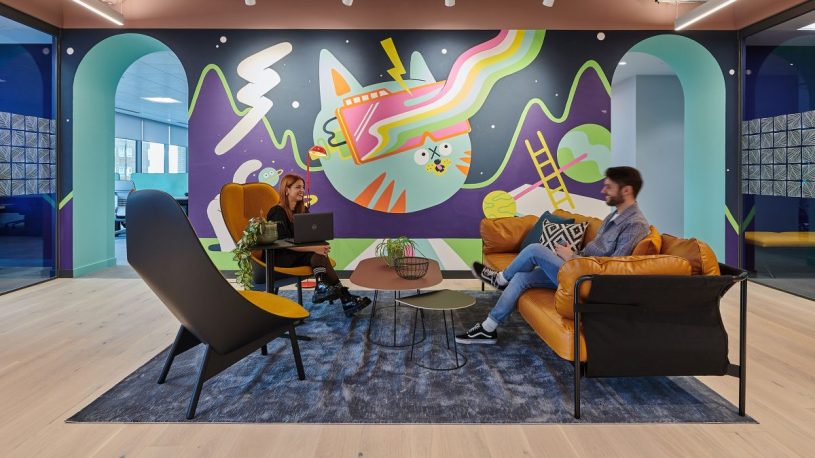
Singapore’s brand environment creates diverse opportunities for experiential design. Retail flagships use experiential elements to differentiate their in-store experience from the purely transactional shopping available online. Museum and heritage attractions use experiential design to bring history and culture to life in ways that engage visitors of all ages. Corporate offices use themed spaces and immersive meeting rooms to express their culture and values to employees and visitors.
Exhibitions and brand pavilions at trade shows, tourism attractions, and world expositions use experiential design to represent countries, organisations, and industries in environments where hundreds of thousands of visitors will form an impression of the brand or entity in a single encounter.
The Role of Technology in Experiential Design
Digital technology has expanded the toolkit available to experiential designers significantly. Interactive projections, augmented reality overlays, large-format LED surfaces, gesture-controlled interfaces, and immersive audio environments can all be integrated into physically designed spaces to create experiences that would not have been possible a decade ago.
The risk in technology-heavy experiential design is that the technology becomes the focus rather than the brand experience it is intended to facilitate. The best technology integrations are ones where the technology enables a compelling interaction that would otherwise be impossible, rather than impressive technology that is disconnected from the brand story.
Dezign Format’s approach to technology in experiential design is purposeful, technology is selected and integrated where it serves the experience’s objectives, not as a demonstration of technological capability for its own sake.
Measurable Outcomes from Experiential Environments
Brand experience investments can be evaluated through several measurable dimensions: visitor footfall, dwell time, social media sharing, brand recall surveys, and commercial outcomes like sales conversion rates. Dezign Format works with clients to define the success metrics for each experiential project before design begins, ensuring that the design decisions are made with clear outcomes in mind.
For Singapore brands and organisations looking for experiential design that creates memorable brand and customer encounters, Dezign Format provides the immersive brand experience design service that Singapore’s most forward-thinking brands use to build lasting customer relationships.
 News 24 Business Blog